THE FIRST COLLECTION·Preorders planned for October 10, 2026Explore the sets
USD $
Design & everyday use
Designing a gift for life after the event
Create corporate event gifts that feel at home after the occasion, with considered branding, useful care cards and a thoughtful handover to recipients.
The event has ended. The name badge comes off and the gift goes home. A week later, where is it? Begin your design brief there.
For a coaster, imagine the next cup on a kitchen table or beside a work notebook. The recipient chooses the setting now. Thoughtful event gifting leaves room for that change of ownership, while preserving a warm connection to the people and occasion behind the gift.
Decide what should still make sense next year
Separate the lasting identity from the temporary message. A company mark, considered colour or pattern can belong on the object. A conference date, campaign headline or list of sponsors may work better on the card or sleeve. Lay both versions out and imagine each sitting in someone’s home after the occasion has passed.
An anniversary design might deliberately celebrate a specific year; a shared team symbol might be the most meaningful detail. Choose permanence consciously, around what the recipient would want to keep seeing.
Compose the branding for a moving object
A coaster is viewed from more than one direction. It is turned, partly covered by a glass and seen across a table. Review the mark in those situations, rather than approving only the straight-on view of a flat artwork file.
Compare actual-size artwork with a physical sample. Check small lettering, contrast against cork or glaze, and how the design looks beside a cup. If several marks share the ceramic edge, give each space. Let the object work visually before adding another line of copy.
Let the message sound like someone meant it
The card is a good place to say why the recipient is receiving the gift. A welcome, a thank-you for the time they contributed, or a note about the pattern gives the object context. Choose a specific, truthful message that someone on the team could comfortably say aloud.
Keep product claims equally specific. The FTC’s Green Guides caution against broad environmental claims that lack support. Describing a confirmed removable part or an included spare is more precise than making an unmeasured environmental promise. Check the final specification before printing the card, including anything described as recyclable, compostable or made from recycled material.
A gift pack should make its contents clear. If it includes a spare cork insert, give that spare a label and a place. If one layer can be lifted out while another should stay attached, show the difference. Use a short printed care sequence with legible type; a QR code can lead to the fuller guide.
Try the complete pack with someone who has not been involved in the project. Let them open it, identify the pieces and explain what they would do after a drink. Avoid coaching them through the difficult moment. Their questions tell you where the card, label or packing order needs another pass.
What is included, including any spare components.
Which parts can be removed and the approved first care steps.
Where to find the full care guide and contact the supplier.
How to identify and request the correct replacement part.
Carry the care through the handover
Think about the journey home. Will recipients carry the gift through a day of sessions, put it in hand luggage or receive it by post? Ask for packaging suited to that route. Keep the essentials with the object if an outer event bag is likely to be discarded.
Approve the object, artwork, card and packaging as a complete sample, and save those versions together. Agree who helps if something arrives damaged or a recipient later needs a part.
A gift for today. And many more days after.
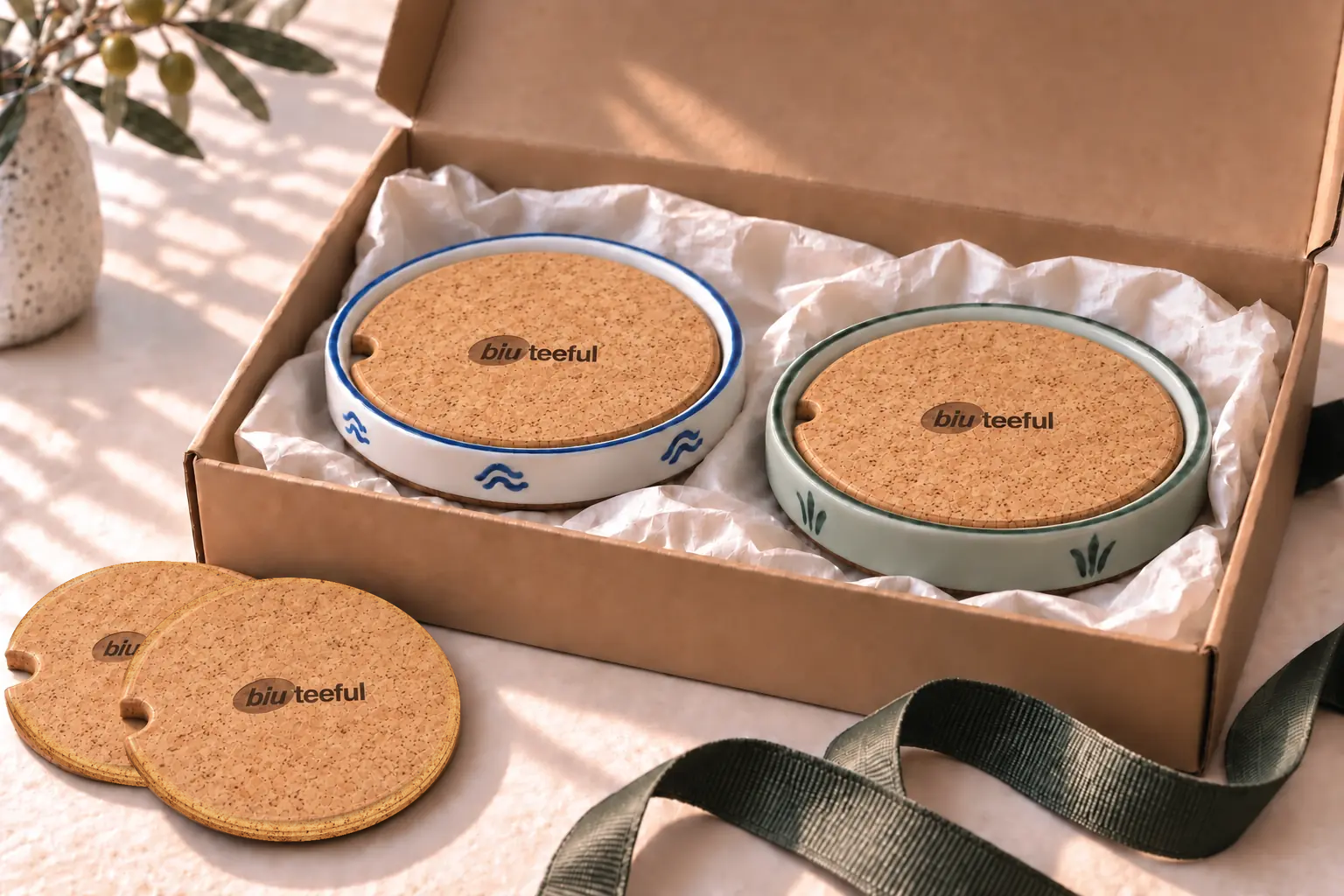
That line describes the ambition behind Biuteeful’s corporate gifting concept: a ceramic object with cork components that can be replaced, carrying a brand in an everyday setting. The pleasure of the gift starts with the design and continues through the care and support around it.
We are preparing for preorders to open on October 10, 2026. Corporate customisation needs agreed artwork, an approved physical sample and confirmed delivery arrangements. Start the conversation with the occasion, the people and the place you hope the gift will occupy afterwards.
A few common questions
Where should an event date go on a corporate gift?
Put it on the object when commemorating that date is part of the gift’s lasting meaning. Otherwise, a removable card or sleeve can carry the occasion while the object keeps a simpler design.
Should a corporate gift use a large or small logo?
Choose the scale around the recipient’s setting and the material. Compare actual-size artwork on a physical sample, including a view with a cup in place. Legibility and composition matter more than a fixed logo-size rule.
What should a care card for a coaster include?
Identify the components and spares, give the approved care steps, and provide a contact for help. Explain which parts are removable and how to request replacements.
Choosing corporate gifts people will use? A practical guide to custom coasters, physical samples, thoughtful branding and the details behind a good quote.
Looking for sustainable coasters? Compare what you already own, replacement parts, care and disposal before choosing cork, ceramic or another material.
Learn when a cork coaster insert needs cleaning, drying or replacing, how to check each part, and why a ready spare makes everyday care easier to manage.