THE FIRST COLLECTION·Preorders planned for October 10, 2026Explore the sets
USD $
Everyday science
Why cold drinks leave water on the table
Why does an iced drink leave a wet ring? Understand condensation, humidity and what to check when choosing a coaster for cold drinks at home or in a café.
You set down a perfectly dry glass of iced coffee. A little later, the glass is beaded with water and there is a wet ring underneath. Nothing tipped over. The drink has not leaked. So where did the water come from?
Usually, the room supplied it. Understanding that small detail makes choosing a coaster more practical, especially for slow coffees, long conversations and drinks served over plenty of ice.
The glass is collecting water from the air
Condensation is water vapour changing into liquid. The U.S. Geological Survey uses droplets on a cold drinking glass as an everyday example. Air around the glass meets a cold surface, and moisture collects there. Droplets can join together, travel down the outside and arrive beneath the glass.
Before blaming condensation, check the ordinary alternatives: a splash from pouring, water left after washing, or a damaged glass. Wipe the outside of an intact chilled glass and watch whether fresh droplets form. That simple observation is often enough to explain why a table gets wet even when everyone is careful with their drinks.
Why an iced drink behaves differently from day to day
The useful weather term is dew point: the temperature at which cooling air reaches saturation. The National Weather Service explains that a higher dew point indicates more moisture in the air. A glass surface below the surrounding air’s dew point provides conditions for condensation.
For a simple illustration, imagine a glass surface at 10°C. If the room’s dew point is 18°C, the glass is below that threshold. If the dew point is 5°C, it is above it. The same glass and drink can therefore face different conditions. This is why a quick demonstration in one room tells only part of the story.
For your own table, the useful question is whether the coaster suits the drinks and conditions you actually have. Include the long iced drink in your comparison, even if a small hot coffee is easier to photograph.
Absorbing water and keeping a table dry are different jobs
A coaster might absorb some moisture, collect it in a recess, or combine several approaches. Follow the whole route: from glass to upper surface, across any edges or joins, and down to the underside. A dry-looking top is only one observation.
Material names can be too broad to settle the question. The Canadian Conservation Institute describes variations in ceramic bodies and glazes; an unglazed absorbent tile and a glazed ceramic pocket should not be assumed to work in the same way. For any coaster, ask how the finished object handles water and when it needs attention.
Use a tray instead of valuable furniture for a first check. Begin with dry coasters, similar glasses and the same amounts of drink and ice. Leave them in the same place and look at consistent intervals. You are trying to understand everyday behaviour, so use a realistic drinking time and lift the glass as you normally would.
Write down what you see, rather than deciding immediately that one material wins. Repeat on another day. A few clear observations are more useful than a dramatic photograph of a glass surrounded by ice, and easier to discuss with a supplier if something needs explaining.
Where does water first collect, and does it stay there?
Is the coaster’s underside dry when you lift it?
Does the coaster lift with the glass or move across the tray?
What needs wiping, emptying or drying before the next drink?
Choose a care routine you will actually follow
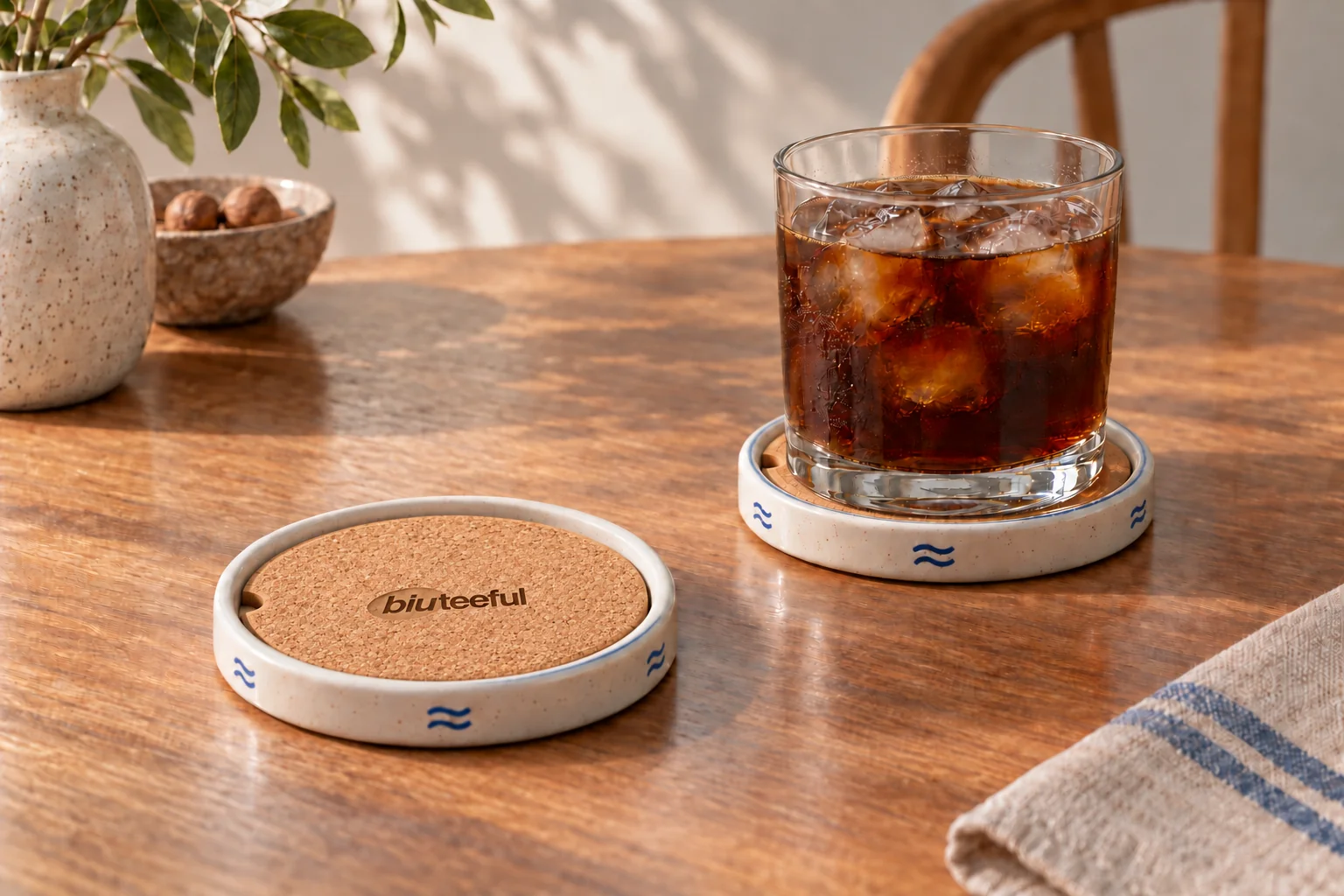
For a coaster with a removable top, include the space beneath it in your checks. Make sure you can reach any collected water and let the parts dry before reassembly. A design with replaceable cork is easier to understand when the top, ceramic body and table-facing base each have a clear job.
For a café, extend the question to the next customer. Where do used inserts go? Where will they dry? How many clean pieces are ready during a busy period? At home, the same thinking can be as simple as keeping a dry spare beside the cups. Choose the object and the routine together.
A few common questions
Does water outside a glass mean it is leaking?
Not necessarily. Condensation forms from moisture in the air on a sufficiently cold surface. Check for spills and damage, then watch whether new droplets appear after you wipe the glass dry.
Will a coaster stop condensation from forming?
A coaster is there to manage water beneath the drink. It does not remove moisture from the room or guarantee that the outside of a cold glass stays dry. Empty or dry it as directed when water collects.
Can one coaster protect every kind of table?
Do not assume so. Check the coaster’s condition, underside and care instructions alongside your furniture maker’s guidance. Try an unfamiliar coaster on a washable tray before trusting it on a delicate finish.
Learn when a cork coaster insert needs cleaning, drying or replacing, how to check each part, and why a ready spare makes everyday care easier to manage.
Planning reusable coasters for a café or restaurant? Test glass fit, clearing, drying space and spare stock with this practical hospitality trial guide.